
Music production is more than pressing record and adding a few sounds to a computer. It is the process of taking a basic idea and turning it into a finished track that sounds clear, powerful and professional. Whether you are producing rock, hip-hop, electronic music, pop or something completely different, good music production comes down to creativity, technical skill and plenty of patience.
Start With a Strong Musical Idea
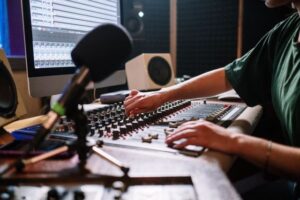 Every great track starts somewhere. It could be a guitar riff, a drum pattern, a vocal melody or even a simple beat that gets stuck in your head.
The important thing is not to overcomplicate things at the beginning. Build around the strongest part of the idea and let the track develop naturally. A solid melody and good rhythm will always matter more than loading your project with hundreds of sounds and effects.
A good music producer knows when to add something and, just as importantly, when to leave something out.
Get Your Recording Right
One of the biggest mistakes beginners make is trying to fix a poor recording during the mixing stage. Good music production starts with quality recordings.
Make sure microphones are positioned correctly, instruments are tuned and your recording space is as controlled as possible. You do not need the most expensive equipment to create a good track, but you do need to understand how to use what you have.
A clean recording gives you much more control when it is time to mix.
Build a Balanced Arrangement
Once your main ideas are recorded, the next step is arranging the track. This is where you decide how the song moves from beginning to end.
Think about the introduction, verses, chorus, bridge and ending. Each section should have a purpose. If everything is playing at full volume from the first second, the track can quickly become tiring.
Good producers understand dynamics. Pull things back during quieter sections and bring in additional instruments when you want the track to hit harder. That contrast creates energy and keeps listeners interested.
Mixing Is Where the Track Comes Together
Mixing is one of the most important parts of the production process. It involves balancing vocals, drums, instruments and other elements so they work together instead of fighting for space.
EQ can help clean up unwanted frequencies, while compression can control dynamics and make certain sounds feel more consistent. Reverb and delay can add depth without making the mix sound muddy.
The goal is not to make every sound huge. The goal is to make the entire track work as one unit.
Learn Your Digital Audio Workstation
Modern producers have access to powerful music production software such as digital audio workstations, commonly known as DAWs. These platforms allow you to record, edit, arrange, mix and produce music from one computer.
Whether you use Ableton Live, Logic Pro, FL Studio, Pro Tools or another DAW, learning the software properly will make a huge difference. You do not need to master every feature. Focus on recording, editing, arranging, mixing and automation first.
Keep Improving Your Production Skills
Becoming a better music producer takes time. There is no shortcut that replaces experience.
Listen to professional tracks and pay attention to their arrangement, drum sounds, vocals and overall balance. Experiment with different production techniques and do not be afraid to make mistakes. Every unfinished track can teach you something useful.
Make Music That Hits Hard
Great music production is about making smart decisions from start to finish. You need a strong idea, clean recordings, a solid arrangement and a balanced mix. Most importantly, you need the discipline to keep learning.
You do not need a massive studio to get started. With the right tools, knowledge and attitude, you can turn a simple idea into a track that sounds confident, polished and ready for listeners.